
What is heat pump fault repair?
Heat pump fault diagnosis and repair means finding why a heat pump has stopped working, is working badly or is showing a fault, and then putting it right. The fault may sit in the outdoor unit, in the pipework and pump that carry heat to the house, in the cylinder, or in the controls and sensors that tell the system what to do.
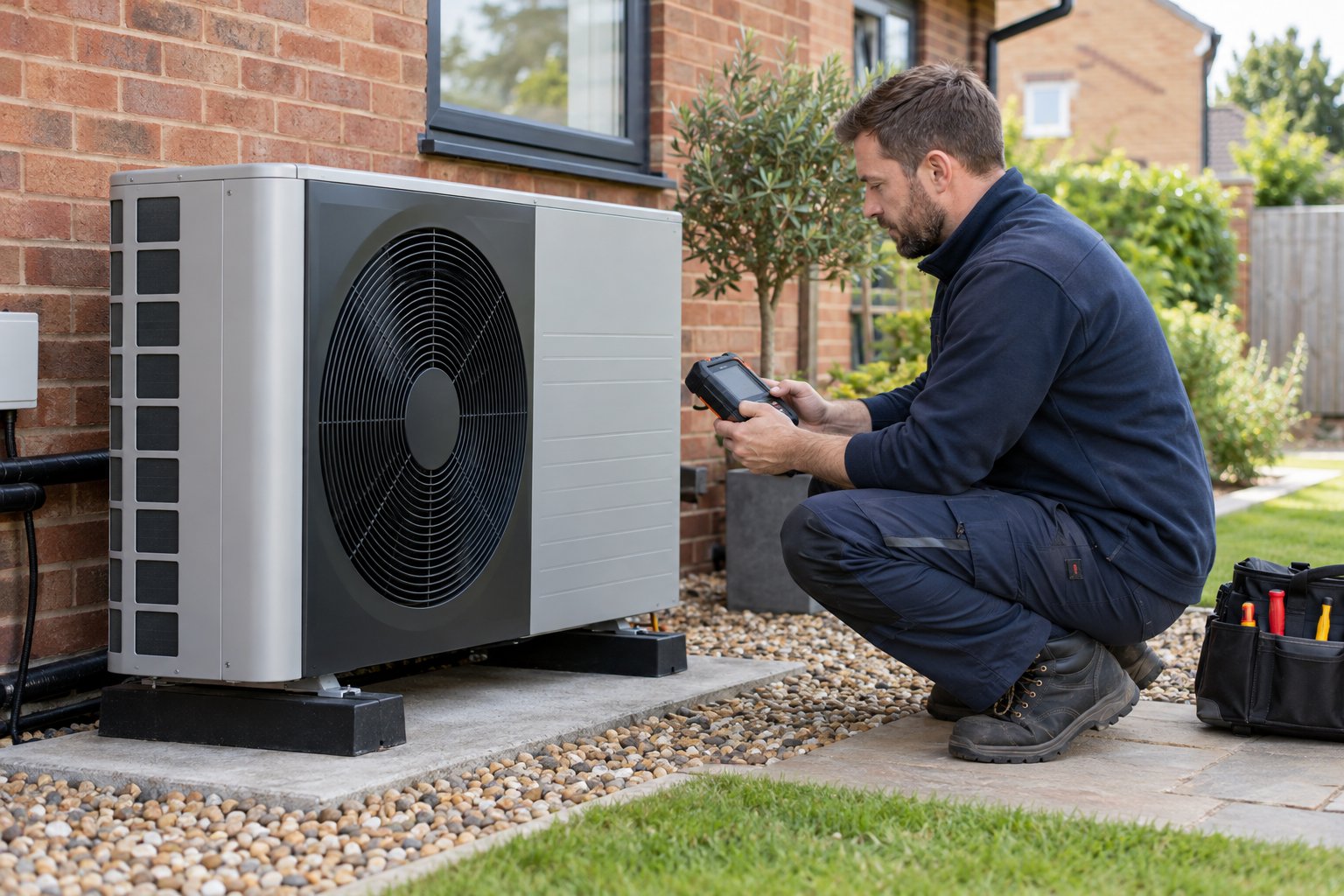
A heat pump combines refrigeration, hydraulics and electronics. The engineer should check all three before replacing parts.
Signs you need heat pump fault repair
- An error code on the display, app or controller
- Ice that builds up on the outdoor unit and does not clear
- The house taking much longer to warm, or never reaching temperature
- Hot water that is cool, or an immersion element running constantly
- Unusual noise from the fan, compressor or pipework
- Electricity bills that rise without a change in weather or use
Heat Pump Fault Diagnosis and Repair options explained
- Controls and sensor faults. Failed temperature sensors, wrong settings or a communication fault. Often quick to put right once found.
- Hydraulic faults. Blocked strainers, low system pressure, air in the circuit or a failing circulation pump reducing flow to the heat pump.
- Outdoor unit faults. Fan motor failure, a blocked coil, a defrost problem or a failed expansion valve.
- Refrigerant and compressor faults. A leak or compressor failure. These need an engineer trained for the refrigerant and equipment, with F-gas qualifications where fluorinated refrigerant is involved. They can cost the most and may involve the manufacturer.
What to include when asking for a quote
Give the make and model of the heat pump, its age and who installed it. A photo of the data plate on the outdoor unit gives the engineer the exact model and serial number. Say whether it is under guarantee, because the first step may be to contact the installer or manufacturer.
Describe what is happening in plain terms and quote any error code exactly. Say when it began, whether it comes and goes, and what else changed around the time: a power cut, a cold snap, a service or a change of settings. Notes like these save diagnosis time.
Ask whether the call-out is charged separately from the repair, whether the price is for diagnosis only or includes minor fixes, and how parts are charged. Check the engineer has experience with your make, and has the appropriate F-gas qualification if work involving fluorinated refrigerant might be needed.
How much does heat pump fault repair cost?
| Type of job | Typical cost |
|---|---|
| Diagnosis with a simple fix such as a strainer or reset | £150–£300 |
| Sensor, circulation pump or fan motor replacement | £300–£650 |
| Circuit board, expansion valve or refrigerant repair | £650–£1,000+ |
Our guide range for the whole service is £150–£1,000. Confirm equipment, labour, VAT and any survey or call-out charge with the business before booking.
These are indicative UK budgeting figures including labour and common parts, not fixed quotes. A compressor replacement or a major refrigerant leak can cost well above the top of this range. Ask the engineer to explain the options before agreeing to any big repair.
The heat pump fault repair process: what to expect
- Report the fault. You describe the symptoms and send the make, model and any error code.
- Diagnosis. The engineer checks the controls, flow, pressures, sensors and the outdoor unit.
- Quote the repair. They explain the fault and give a price for the part and labour.
- Repair. The faulty part is fixed or replaced, and the system is tested.
- Report. The engineer records what was found and done, and advises on anything else.
Planning permission and building regulations
A straightforward repair normally needs no planning permission, but replacement equipment or changes to electrical and hot water systems can bring additional requirements. Work on a circuit containing fluorinated refrigerant must be carried out by an appropriately F-gas qualified engineer, and some electrical repairs need certification. Check your guarantee before arranging a repair, because work by an unapproved engineer may affect it.
How to choose a heat pump fault repair specialist
- Do they have experience with your make and model of heat pump?
- Are they trained for your equipment and refrigerant, with F-gas qualifications where required?
- Is the call-out charged separately, and does it come off the repair price?
- Will they explain the fault and the options before starting work?
- Will they check your guarantee position before doing anything that could affect it?
Frequently asked questions
How do I know if my heat pump needs a repair or a service?
A service is a routine check; a repair fixes a fault. If the unit shows an error, loses heat or makes strange noises, it needs a diagnosis. Regular servicing can reduce the chance of faults.
Can a heat pump be repaired, or does it need replacing?
Most faults can be repaired. Replacement is usually considered only for an old unit with a major failure, such as a compressor, where the repair is close to the cost of a new one.
Should I keep using my heat pump with a fault?
It depends on the fault. A minor error may be safe to run, but ice, loud noise or a lockout is best checked. Follow the manual and ask the engineer if it is safe to keep running.
Why does my heat pump keep tripping?
Possible reasons include a failing component, a fault in the electrical supply, low flow or a protection device doing its job. Do not keep resetting the breaker. Ask an engineer to find the cause.