
What is air-to-air heat pump installation?
Air-to-air heat pump installation means fitting a refrigerant-based heating and cooling system that takes heat from outdoor air and delivers it straight into the rooms through wall or ceiling units. It is closely related to split air conditioning, but run mainly for heating. There are no wet pipes, radiators or hot water cylinders involved.
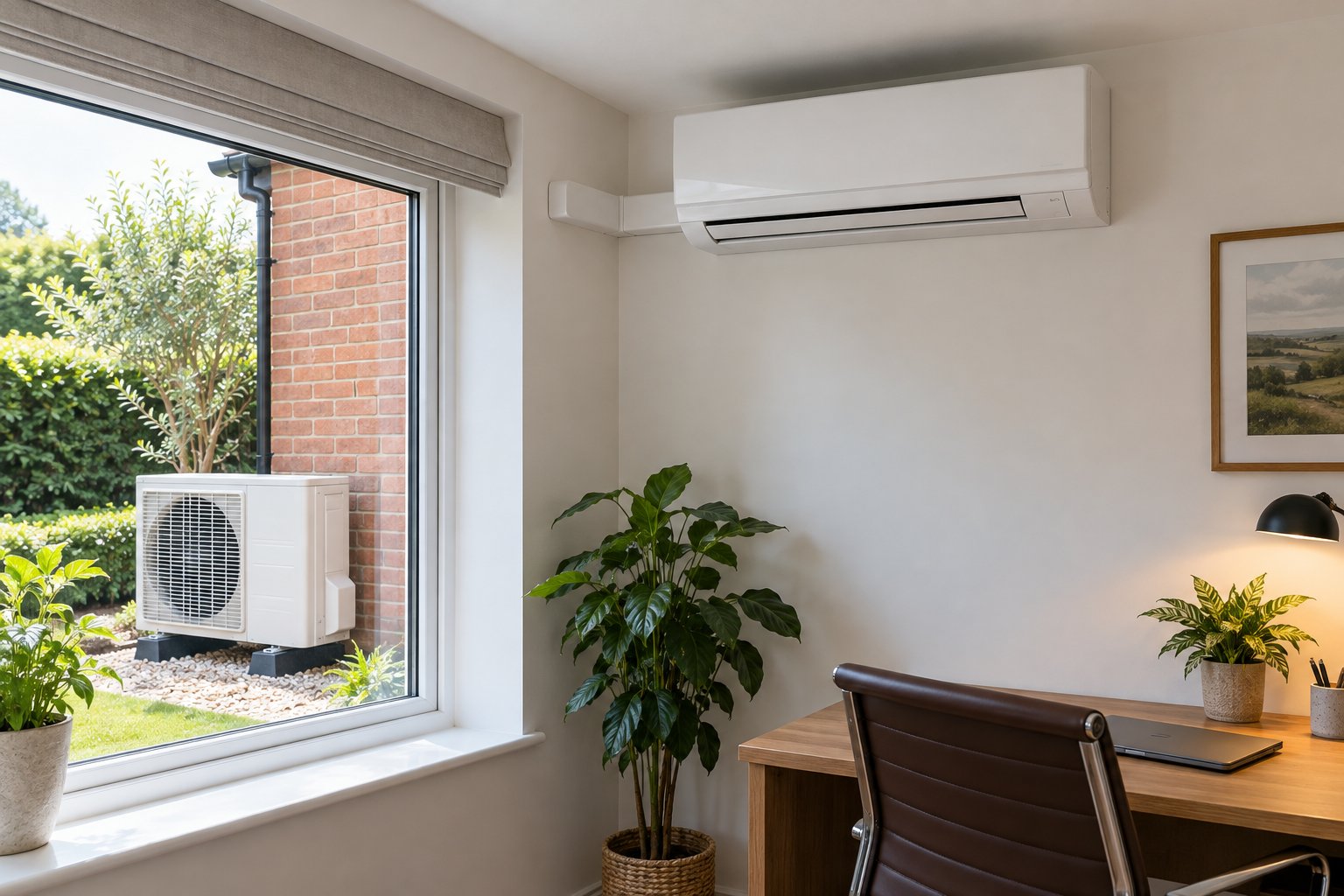
It suits homes where radiators are impractical: loft rooms, extensions, annexes, flats, holiday lets or older properties where pipework is hard to hide. It can provide cooling as well as heating. Standard room-heating split systems do not supply domestic hot water. Check grant eligibility for the proposed equipment before agreeing a price.
Signs you need air-to-air heat pump installation
- A new extension, conversion or garden room with no existing heating
- Electric panel heaters or oil-filled radiators running for long hours
- Bedrooms that overheat in summer and are cold in winter
- A property where pipe routes for a wet system would be too disruptive
- Storage heaters that no longer hold charge
- A wish to heat and cool several rooms without any pipework under floors
Air-to-Air Heat Pump Installation options explained
- Single split. One outdoor unit linked to one indoor unit. It is the simplest and cheapest option and suits a single large room.
- Multi-split. One outdoor unit feeding two to five indoor units. It costs more to install but uses less wall space outside. Each room needs its own run of pipe.
- Ducted systems. An indoor unit hidden in a loft or ceiling void blows heated air through ducts to grilles. It looks neat but needs space and careful design.
- Floor-standing and cassette units. Alternatives to wall units where wall space is limited, such as under a window or in a suspended ceiling.
What to include when asking for a quote
Start with the rooms. Give each room’s approximate size, its use, how well it holds heat, and whether it has large windows or a high ceiling. An installer cannot size a unit properly from a postcode alone, and a quote that offers the same unit for a bedroom and an open-plan lounge deserves a question.
Describe the walls where the pipes will pass and where the outdoor unit could stand. Solid brick, cavity walls, timber frame and rendered walls each need different drilling. Mention flat roofs, shared boundaries and neighbours’ windows, because outdoor unit noise is the most common reason for a complaint.
Ask what the price assumes about pipe length, electrical connection and condensate drainage. If a new circuit from the consumer unit is needed, check it is in the quote, along with a certificate from the electrician. Make sure the brand, model and rated heating output of every indoor unit are named.
How much does air-to-air heat pump installation cost?
| Type of job | Typical cost |
|---|---|
| Single split heating one room | £1,500–£2,500 |
| Two or three room multi-split | £2,500–£4,000 |
| Larger multi-split or ducted system | £4,000–£5,000+ |
Our guide range for the whole service is £1,500–£5,000. Confirm equipment, labour, VAT and any survey or call-out charge with the business before booking.
These are indicative UK budgeting figures for air-to-air systems, not fixed quotes. Longer pipe runs, wall cores through thick masonry, new electrical circuits and premium brands increase the price. Check what the guarantee covers and whether an annual service is needed to keep it.
The air-to-air heat pump installation process: what to expect
- Survey. The installer checks each room, the wall routes and the outdoor unit position.
- Quote and design. You get a written price naming each unit, its output and the pipe lengths allowed.
- Install indoor units. Brackets are fixed and holes cored through the walls.
- Outdoor unit and pipework. The outdoor unit is mounted, pipes are run, tested and evacuated.
- Commissioning. The refrigerant is released, the units are tested and you are shown the controls.
Planning permission and building regulations
Many installations are straightforward, but outdoor unit position, noise and appearance can bring planning rules into play, particularly for listed buildings, conservation areas, flats and homes on shared plots. Check with your local council before ordering. New electrical circuits need the applicable safety checks and notification. Part P applies in England and Wales; Scotland and Northern Ireland have their own building standards and procedures. For fluorinated refrigerant, check the engineer’s F-gas qualification and the business’s company certification where required.
For funding conditions, check the Boiler Upgrade Scheme guidance for England and Wales before ordering.
How to choose an air-to-air heat pump installation specialist
- Do they hold an F-gas qualification, and can they show it?
- Which brand and model do they propose, and what is each indoor unit’s rated output?
- Who handles the electrical connection and issues the certificate?
- What does the guarantee cover, and does it depend on an annual service?
- Where do they propose to put the outdoor unit, and have they thought about noise?
Frequently asked questions
Is an air-to-air heat pump cheaper to run than electric heaters?
Usually, yes. A good air-to-air unit produces several units of heat for every unit of electricity, while a panel heater produces one. The saving depends on the unit, the room and how it is used.
Can an air-to-air heat pump replace my boiler?
Not in the usual sense. It heats rooms but does not heat water or run radiators. Some homes keep a boiler or cylinder for hot water and use air-to-air heating in selected rooms.
Will it work in very cold weather?
Modern units keep heating well below freezing, but output drops as the outdoor temperature falls. Ask the installer for the output at your coldest expected temperature, not only at 7°C.
Do air-to-air heat pumps qualify for the Boiler Upgrade Scheme?
Eligible air-to-air systems can receive support in England and Wales, subject to the current scheme rules. Confirm that the equipment, property, installer and application meet the requirements before relying on a grant.