
What is heat pump cylinder installation?
Heat pump cylinder installation means fitting a hot water cylinder designed to work with a heat pump. These cylinders have a much larger internal coil than a conventional one, because the heat pump’s flow temperature is lower than a boiler’s and the heat needs more surface area to pass into the water.
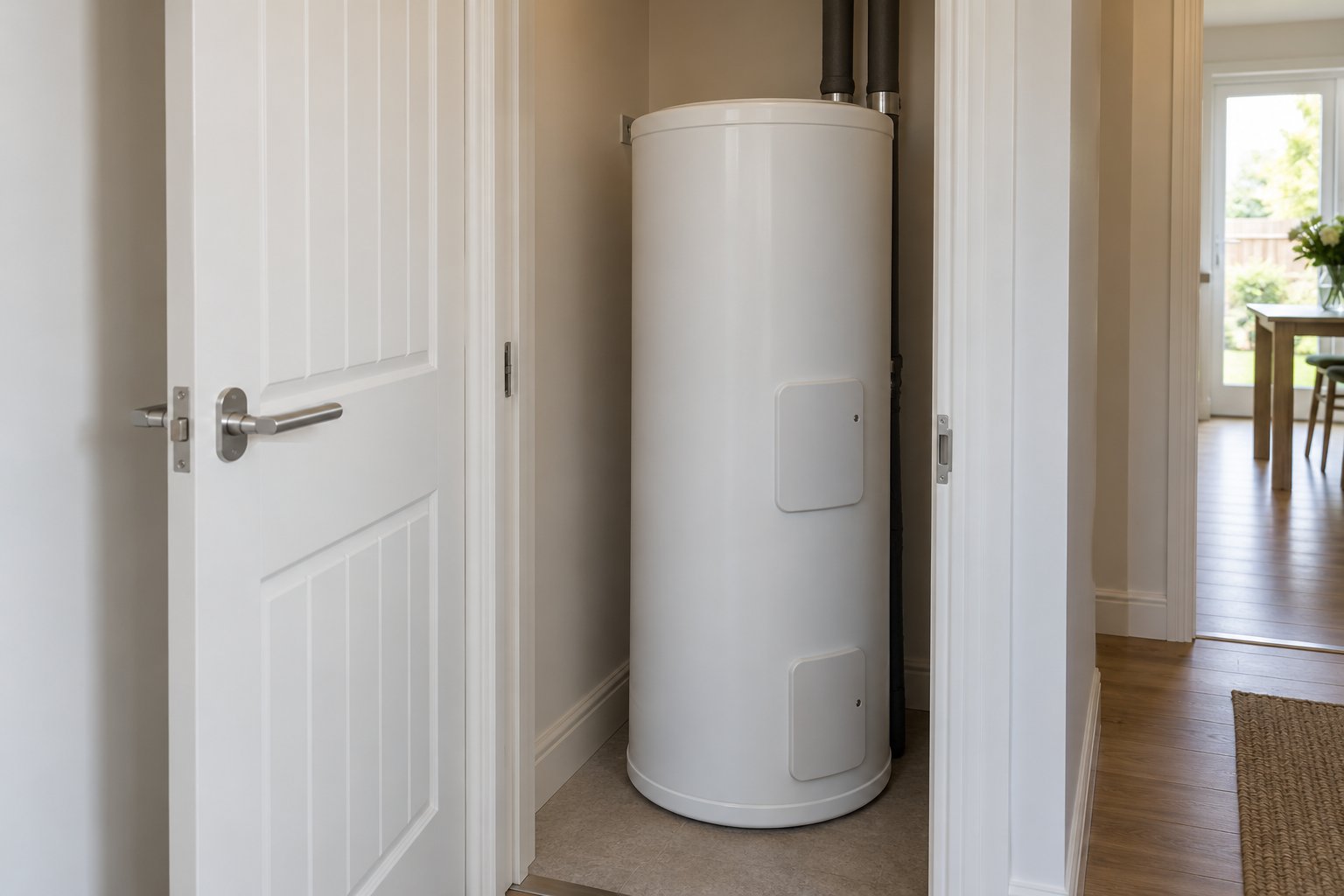
The cylinder is fitted when the heat pump goes in, or as a separate upgrade before one is installed. It also covers the safety equipment, controls and pipework that make the cylinder work properly with the heat pump.
Signs you need heat pump cylinder installation
- A combi boiler being replaced with a heat pump, so there is no cylinder at all
- An existing cylinder with a coil too small for a heat pump
- Hot water that runs out or takes hours to reheat
- A very old cylinder with poor insulation or a corroded casing
- A cylinder in a loft or cupboard that cannot be reached for servicing
- A growing household needing more hot water capacity
Heat Pump Cylinder Installation options explained
- Unvented, mains-pressure cylinder. The most common choice. Hot water leaves at mains pressure, so showers perform well. It needs a discharge pipe and a qualified installer.
- Vented cylinder. Fed from a cold water tank in the loft. Lower pressure, but simpler and still found in older houses.
- Thermal store. Stores heat and can provide domestic hot water through a heat exchanger. A heating buffer serves a different purpose and is not a direct substitute for a domestic hot water cylinder.
- Integrated heat pump cylinder units. Compact units where the cylinder and indoor heat pump components sit together, saving floor space.
What to include when asking for a quote
Say how many people live in the house, how many bathrooms and showers there are, and how often the hot water runs out. Cylinder volume depends more on these details than on the number of bedrooms. A household of two with one shower needs a very different cylinder from a family of five with two.
Describe the space. Give the room or cupboard dimensions, the ceiling height, the width of the door or hatch the cylinder has to pass through, and the floor type. Unvented cylinders are heavy when full, and some loft floors cannot take that. A photo of the existing cylinder and pipes tells the installer what has to move.
Ask which cylinder is quoted by make, volume and coil area, how long it will take to heat from cold using the heat pump, and what controls are included. Check that the discharge pipe, expansion vessel and tundish are in the price, and that the installer holds the unvented qualification.
How much does heat pump cylinder installation cost?
| Type of job | Typical cost |
|---|---|
| Like-for-like swap in the same position | £1,200–£1,800 |
| First cylinder in a house moving off a combi | £1,800–£2,500 |
| Large cylinder, new location or complex pipe run | £2,500–£3,000+ |
Our guide range for the whole service is £1,200–£3,000. Confirm equipment, labour, VAT and any survey or call-out charge with the business before booking.
These are indicative UK budgeting figures including the cylinder and fitting, not fixed quotes. A cylinder fitted as part of a full heat pump installation is often priced within the wider system, so ask for it to be itemised if you want to compare.
The heat pump cylinder installation process: what to expect
- Survey. The installer checks the space, existing pipework and access.
- Remove the old cylinder. The water is drained, the old cylinder disconnected and taken out.
- Position the new cylinder. The new cylinder is set on a suitable base and levelled.
- Connect pipework and safety equipment. Primary pipes, cold feed, expansion vessel and discharge pipe are fitted.
- Commission. The system is filled, tested and set up, including the legionella cycle.
Planning permission and building regulations
Use an installer competent in unvented hot water systems and ask how the work will be notified. Approved Document G for England explains hot water safety requirements there; the other UK nations have their own guidance. Agree the expansion, temperature controls and safe discharge route before fitting. MCS paperwork does not replace any building regulations notification required for the cylinder.
How to choose a heat pump cylinder installation specialist
- Do they hold a current unvented hot water qualification?
- Which cylinder make, volume and coil area are they quoting?
- How long will it take to reheat the cylinder from cold using the heat pump?
- Are the expansion vessel, tundish and discharge pipe included in the price?
- What guarantee comes with the cylinder, and does it need an annual service?
Frequently asked questions
Can I keep my existing cylinder if I get a heat pump?
Only if the coil is large enough. Most standard cylinders have a coil designed for a boiler and will heat too slowly from a heat pump. An installer can check the coil area and advise.
How much space does a heat pump cylinder need?
Usually a little more than a standard one for the same volume, because of the larger coil and insulation. Measure the space, including ceiling height and access, before you ask for quotes.
Do I need a buffer tank as well?
Not always. Some heat pump systems benefit from a buffer to help the pump run smoothly, but many do not need one. Ask the installer to explain why they have or have not included one.
How often does an unvented cylinder need servicing?
Annually. The safety valves and expansion arrangements should be checked, and many manufacturers require this to keep the guarantee valid.