
What is ground source heat pump installation?
Ground source heat pump installation means burying a loop of pipe in the ground, or drilling boreholes, to collect low-grade heat that a heat pump upgrades for radiators, underfloor heating and hot water. The heat is steadier through the year than outdoor air, which is why these systems keep their efficiency in cold spells.
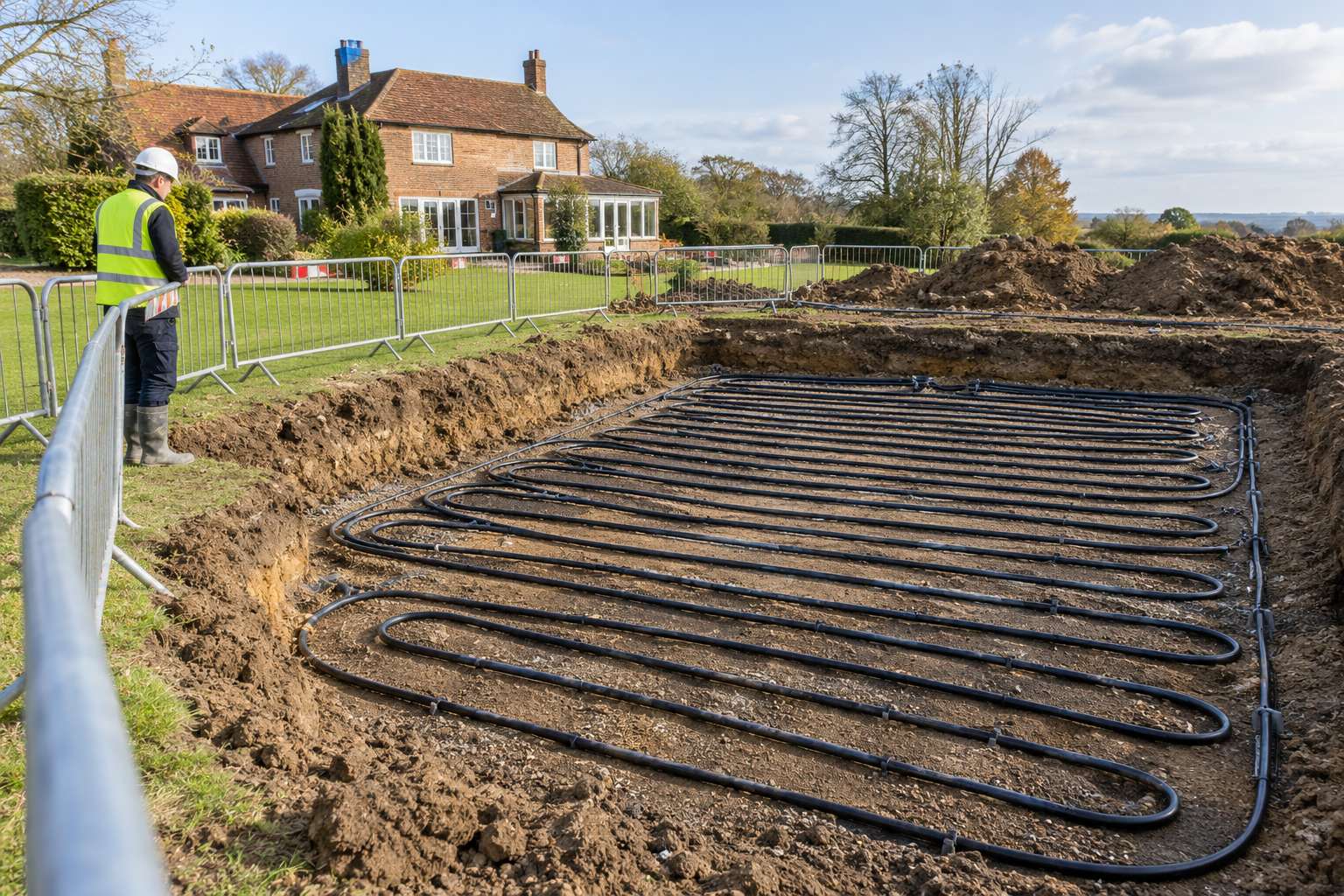
Ground source installation is a substantial job. The groundwork, the plant room and the design all need planning, so the work normally runs over weeks, not days. It is most common in rural homes, new builds, farms and larger properties with space outside.
Signs you need ground source heat pump installation
- An oil, LPG or electric heating system with high running costs
- A large garden, paddock or field with free ground
- A new build or renovation where trenches can be dug cheaply
- Underfloor heating already fitted or planned
- A wish to avoid noise from an outdoor fan unit
- Available funding that favours an efficient, long-life system
Ground Source Heat Pump Installation options explained
- Horizontal ground loop. Pipe laid in trenches or a shallow excavation, typically 1 to 2 metres deep. Cheaper than boreholes, but it needs a large open area.
- Vertical borehole. One or more boreholes drilled to 50 to 150 metres deep. Needs far less surface area and works on small plots, but the drilling is expensive.
- Pond or lake loop. Mats of pipe sunk in a pond or lake at least 2 metres deep. Cost-effective where a suitable body of water exists.
- Open loop. Groundwater is pumped through the heat pump and returned. It needs consent and suitable water, so it is rare in domestic work.
What to include when asking for a quote
Begin with the plot. Give the approximate garden area, its slope, soil or rock if you know it, and any trees, ponds, drains, septic tanks or buried services. A drawing or a satellite photo with the likely collector area marked helps the installer decide between a field loop and a borehole.
Describe how the house is heated and insulated at present: radiators or underfloor, the age of the walls and loft, and the fuel you use. Heat loss drives the size of the pump and the length of the loop, so a quote that does not state a heat load figure is hard to compare with one that does.
Ask each installer to state who does the groundwork, whether the borehole driller or digger is subcontracted, how the ground will be reinstated and what is included for the plant room and cylinder. Check the price covers commissioning, controls, and registration of the guarantee.
How much does ground source heat pump installation cost?
| Type of job | Typical cost |
|---|---|
| Horizontal loop on easy ground, small to mid-sized home | £20,000–£28,000 |
| Larger home or difficult ground | £28,000–£38,000 |
| Deep borehole system or very large property | £38,000–£45,000+ |
Our guide range for the whole service is £20,000–£45,000. Confirm equipment, labour, VAT and any survey or call-out charge with the business before booking.
These are indicative UK budgeting figures for a complete installed system. The Boiler Upgrade Scheme can reduce the cost for eligible homes in England and Wales, but only if the installer is MCS certified. Compare the net price after any grant only once you have seen the grant rules.
The ground source heat pump installation process: what to expect
- Survey and design. The installer measures the heat loss, assesses the ground and proposes a loop type.
- Groundwork. Trenches are dug or boreholes drilled and the collector laid, tested and backfilled.
- Plant room. The heat pump, cylinder, pumps and controls are installed inside.
- Connection. The collector joins the heat pump and the heating circuit.
- Commissioning. The system is filled, tested and handed over with the controls explained.
Planning permission and building regulations
Planning rules for ground loops are generally relaxed, but the position of any plant, boreholes in sensitive areas, conservation areas, flood plains or listed buildings may need approval. Boreholes may require notification or consent beyond planning, so check with your council. The installation is notifiable under Building Regulations, usually through the installer’s competent person scheme, and an MCS certificate is needed to claim the Boiler Upgrade Scheme.
For current rules on grants and approved installers, see the GOV.UK pages on the Boiler Upgrade Scheme and the MCS website.
How to choose a ground source heat pump installation specialist
- Is the business MCS certified, and for ground source specifically?
- Who does the groundwork, and are they employees or subcontractors?
- What heat load figure have they used, and how was it calculated?
- How will the ground and garden be reinstated, and who is responsible?
- Do they offer a servicing plan and a clear guarantee on the heat pump and the loop?
Frequently asked questions
Is ground source better than air source?
Neither is better in every case. Ground source often gives higher efficiency but costs more to install and needs space or a borehole. Air source is cheaper and easier to fit. A site survey should say which suits your property.
How long does a ground loop last?
The buried pipework is designed to last for decades, often 50 years or more. The heat pump itself usually lasts 20 years or so with servicing.
Do I need a lot of land?
A horizontal loop does. Vertical boreholes need far less ground but need a drilling rig to reach the site and cost more.
Does it work with radiators?
Yes, but the radiators need to be large enough for low flow temperatures. Underfloor heating works particularly well. Your installer should check each room’s heat loss.