
What is heat pump radiator upgrade?
Heat pump radiator upgrades are changes to the heat emitters in a home so they work at the lower water temperatures a heat pump runs at. An older boiler system may have been designed to send water at about 70°C to the radiators. A heat pump is more efficient at 35 to 55°C, and a radiator that was the right size on a boiler can give far less heat at that temperature.
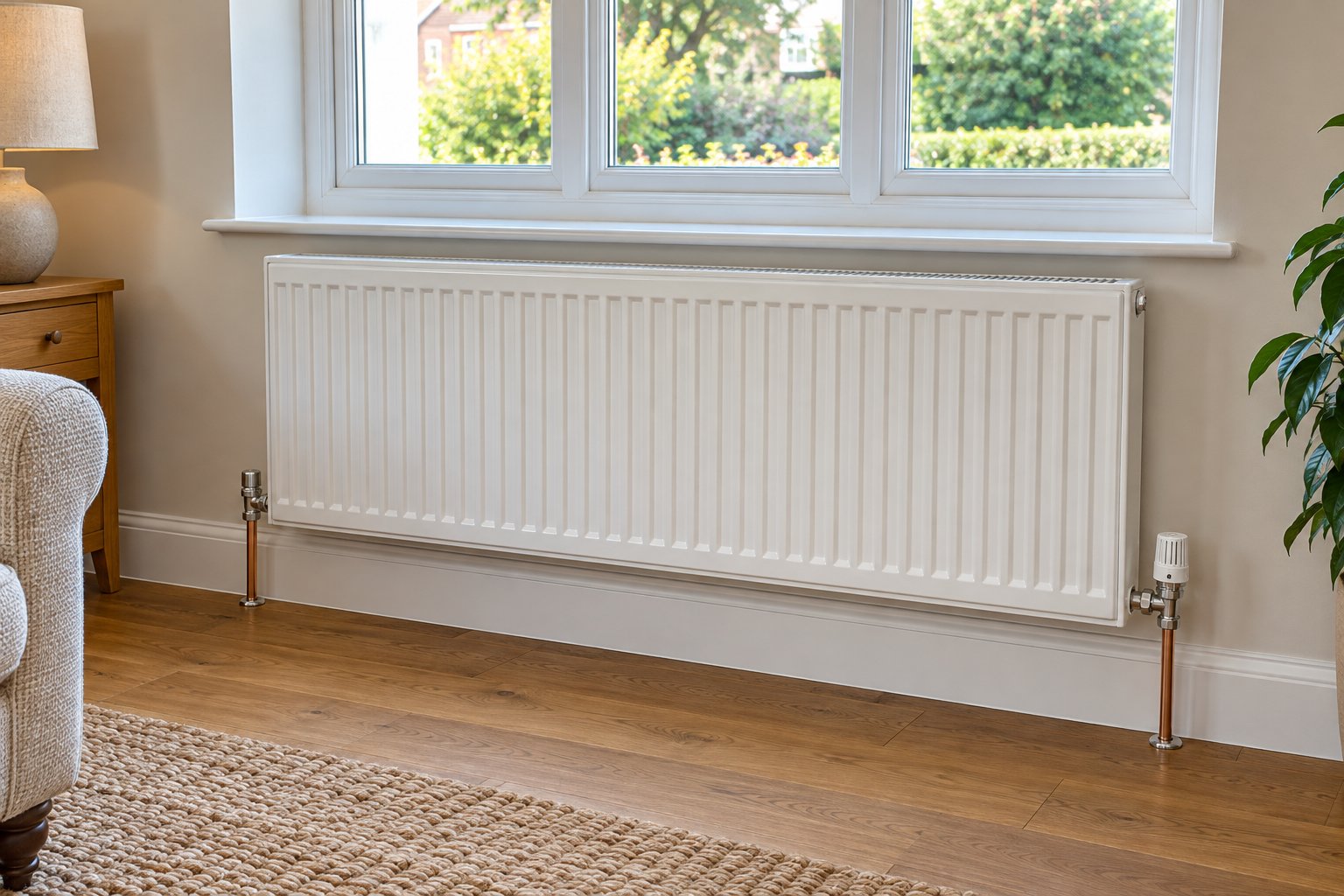
The work can be as small as swapping a radiator or two, or as wide as replacing most emitters in the house and upsizing pipes behind them. A good installer decides which by calculating the heat loss of each room, not by changing everything.
Signs you need heat pump radiator upgrade
- A heat pump quote or survey that says certain radiators are too small
- Single-panel radiators in large rooms, conservatories or rooms with big windows
- Rooms that stay cold despite the heating running
- Microbore or narrow pipes feeding the radiators
- A north-facing or poorly insulated room that is never really warm
- A plan to switch from a boiler to a heat pump in the next year
Heat Pump Radiator Upgrades options explained
- Larger like-for-like radiators. The same style in a bigger size or with a second panel and fins. This is the most common upgrade.
- Fan-assisted radiators. Radiators with a built-in fan that boosts output. They suit tight spaces but need a power supply.
- Pipework upsizing. Replacing narrow or microbore pipes so bigger radiators receive enough water. Needed less often, but costly when it is.
- Underfloor heating. A low-temperature emitter that suits a heat pump well. It is best for new builds or floors that are being lifted anyway.
What to include when asking for a quote
Start with the room list. Name the rooms that stay cold, give the size of the radiators in them and say whether the house is solid wall, cavity, insulated or not. Installers use these details to compare a room’s heat loss with what its radiator gives at the heat pump’s lower flow temperature.
Give any figures you already have. If a heat pump designer has produced a room-by-room heat loss report, send it to every installer you ask. They can then price the same radiators against the same targets, so the quotes cover comparable work.
Ask for a radiator schedule: size, type, rated output at the heat pump’s flow temperature and the room it goes in. Check that new valves, pipework changes, refilling, balancing and making good plaster are included, and whether the old radiators are taken away.
How much does heat pump radiator upgrade cost?
| Type of job | Typical cost |
|---|---|
| Two or three radiators changed for larger ones | £1,000–£1,800 |
| Most radiators replaced in a medium house, some pipe changes | £1,800–£3,500 |
| Whole-house replacement, fan-assisted units or pipework upsizing | £3,500–£5,000+ |
Our guide range for the whole service is £1,000–£5,000. Confirm equipment, labour, VAT and any survey or call-out charge with the business before booking.
These are indicative UK budgeting figures including radiators and fitting, not fixed quotes. Designer radiators, fan-assisted units, solid floors and extensive pipework changes raise the price. Ask whether a balancing visit after the heat pump is commissioned is included.
The heat pump radiator upgrade process: what to expect
- Heat loss check. Each room’s heat requirement is calculated and compared with its current radiator.
- Radiator schedule. The installer lists which radiators change and the size and output of each replacement.
- Drain down. The heating is drained, or isolated, ready to swap the radiators.
- Fit and upgrade. New radiators and any larger pipes are fitted, then the system is refilled and bled.
- Balance. Every radiator is balanced at the heat pump’s flow temperature and the rooms are checked.
Planning permission and building regulations
Replacing radiators like for like does not need planning permission and is not generally notifiable. If the work forms part of a heat pump installation, the installer’s competent person scheme may cover it. In leasehold flats, check before lifting floors above shared ceilings, and in listed buildings check before changing radiators in important rooms.
How to choose a heat pump radiator upgrade specialist
- Have they produced a room-by-room heat loss calculation, not just a rule of thumb?
- Will they provide a radiator schedule with the rated output of each radiator?
- Do they check pipe sizes and flow, not just radiator sizes?
- Will they balance the system once the heat pump is running?
- How will they protect floors and make good the walls?
Frequently asked questions
Will my old radiators work with a heat pump?
Some will, particularly large ones in well-insulated rooms. Others will give too little heat at lower flow temperatures. Only a room-by-room calculation can say which.
Can I run the heat pump hotter to avoid changing radiators?
Sometimes, within the heat pump’s operating limits. Higher flow temperatures usually reduce efficiency, so compare the likely running cost with the cost of upgrading the radiators.
Should I improve insulation instead?
Insulation reduces the heat each room needs, so it can cut or remove the need for bigger radiators. Ask the installer how much the heat loss falls if loft, wall or draught improvements are made first.
Do I need to replace the pipework as well?
Not always. Bigger radiators need more flow, and narrow or microbore pipes can restrict it. The installer should check the pipework before quoting.